In 1985 two local mothers and colleagues at Benarty Community Centre, Ann McCallum and Betty Martin, became concerned about the local shops in Ballingry selling Skoal Bandits oral tobacco, or snuff as it was commonly known. The tobacco was encased in a tiny teabag which was placed in the mouth between the gum and cheek to allow nicotine to be absorbed straight into the bloodstream.
Betty then saw a film covering the growing use of the product in the USA and how it was particularly popular amongst youngsters because it was packaged like sweeties and flavoured with a fruity taste. The film shared a harrowing story of a young American who had died from mouth cancer.
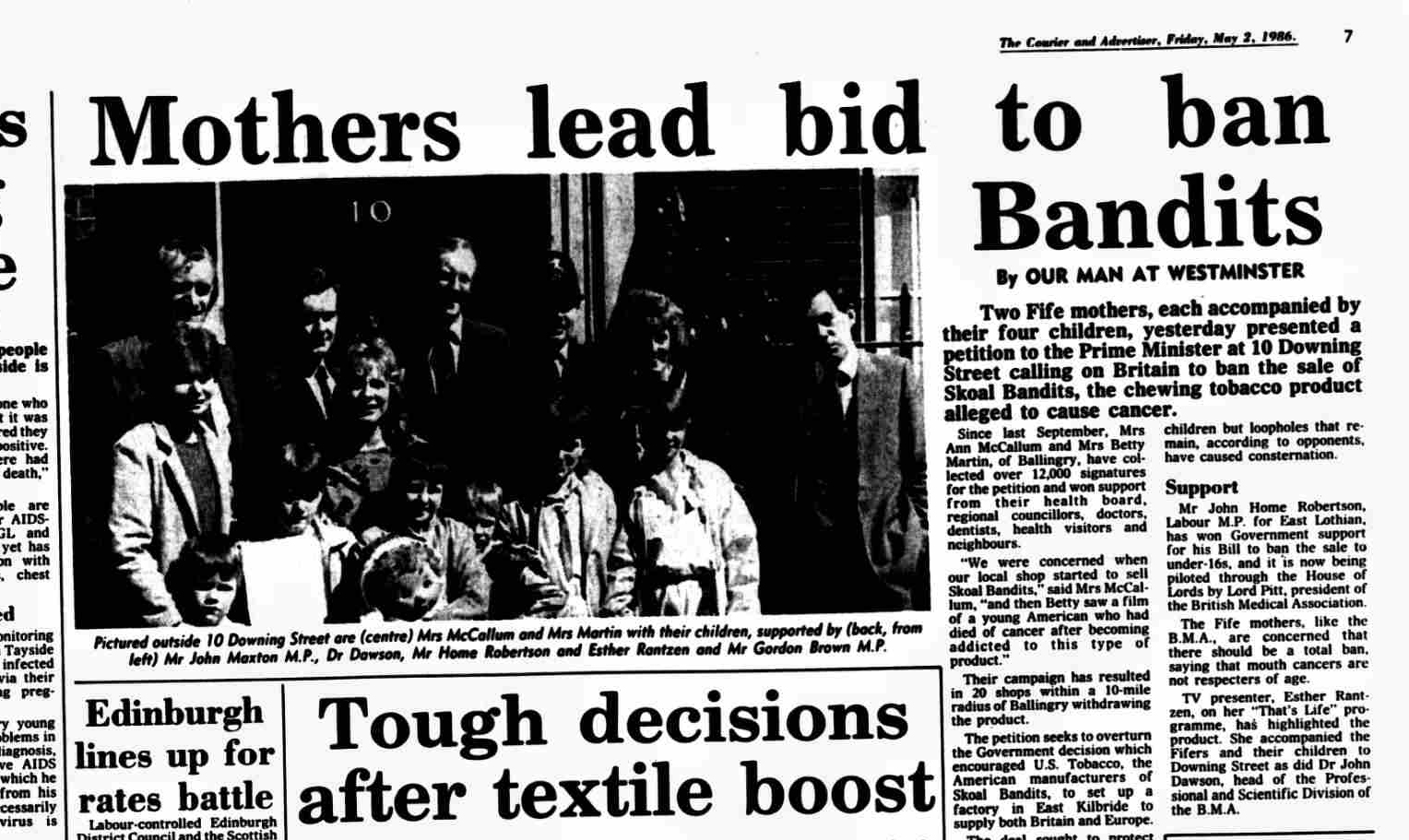
Ann and Betty, with no previous experience of campaigning, decided to act and challenge local shops to stop selling this product to the local community. Their ambitions were based in the local area initially but as they researched the product further they realised that this was a danger to health across the country and their campaign grew: firstly to the surrounding villages and eventually into a nationwide push to have the product banned in the UK.
The initial campaign successfully led to 20 shops within a 10 mile radius of Ballingry withdrawing the product and they then turned their attention to gaining petition signatures seeking to overturn the Government’s decision to set up a factory in East Kilbride to manufacture the product for distribution in Britain and Europe.

They wrote hundreds of letters including several to the manufacturers of Skoal Bandits, US Tobacco International and due to the campaign there was the threat of legal action against them. It became clear that they were not just taking on local shopkeepers but also a huge corporation and exposing a government decision to make it possible for the manufacturing of the product in Scotland.
By February 1986 they had amassed 7,000 signatures and decided that if they reached 10,000 they would travel to London to present them to the Prime Minister, Margaret Thatcher.
On 1st May 1986 Ann and Betty and their 8 children (4 each) travelled to London with over 12,000 signatures on their petitions. By this point the campaign had really gained attention with Esther Rantzen meeting the families at Downing Street to film a piece for the popular ‘That’s Life’ programme.
Following this national publicity lots of letters from around the UK came piling in from other would be campaigners around the country looking for advice on how to take similar steps for their community.
The pressure created by the campaign, the political support and the growing medical evidence about the dangers of the product led to an outright ban of Skoal Bandits sales in the UK. The ban was announced in Parliament on 26th February 1988 and took effect in March 1990. Anyone selling the product could face up to 6 months in jail and a £2,000 fine.
Sadly, the incredible news about Ann and Betty’s campaign was tinged with tragedy as the announcement came nearly exactly a year after Ann’s untimely death.
Ann was diagnosed with cancer during 1986 and would pass away on 2nd March 1987. It was somewhat ironic that having campaigned to protect others from the dangers of cancer caused by Skoal Bandits that cancer would then take her life.
However, her legacy of service to the community lives on through what she and Betty achieved 35 years ago and through the Benarty Citizen of the Year Award that is awarded each year to those in the local community who have displayed selfless service, courage under adversity or brought distinction to the area.
Alex McCallum